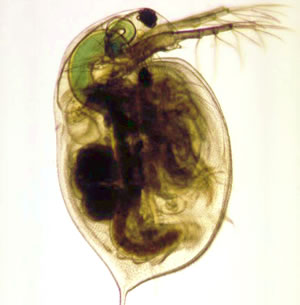
Daphnia magna - A freshwater flea often used as an experimental animal because of its average size of 5mm and the fact that it is easily cultured.
Ethanol - Also known as Ethyl Alcohol. Ethanol is also used as a renewable car fuel alternative for gasoline.
Nicotine - Nicotine is an alkaloid found in tobacco, which also is responsible for the addictive properties.
Caffeine - Caffeine is an alkaloid that gives coffee and tea its mind-stimulating effects.
Caffeine - Caffeine is an alkaloid that gives coffee and tea its mind-stimulating effects.
mM - millimole, or 1/1000 of a mole per liter.
Summary:
72 Daphnia magna in total were used in the experiment. Initially, the average heart rate of the 72 Daphnia was 354 beats per minute, ranging from 91 to 521 beats a minute.
Ethyl Alcohol, or Ethanol, cause a decrease in heart rate.
5% ethanol lowered heart rate to about half of the initial rate (177 beats per minute). After the 5% ethanol was removed, it took 10 minutes for the heart rate to reverse to the initial average. 10% ethanol decreased to a fifth of the initial heart rate (71 beats per minute). After the removal of the 10% ethanol, it took 20 to 30 minutes for full reversal of the effects.
When nicotine was used on the Daphnia, the heart rate increased, but with larger amounts of nicotine the heart rate of the Daphnia had a period of decreasing heart rate after the initial increase.
When 0.1 mM of nicotine was used, heart rate increased by about 20% (425 beats per minutes). At 1 mM of nicotine, two of three samples increased heart rate, while the third decreased. When 50 mM of nicotine was used, the heart rate of samples increased then decreased in heart rate over 30 minutes.
When caffeine was used on the Daphnia the heart rate the effect was unclear because most of the changes in mean heart rate were due to one sample's heart rate changing differently from the others.
Discussion:
The decrease in heart rate of the Daphnia magna was most clear with the ethanol. When nicotine was used the change followed a pattern of increasing and decreasing. Finally, caffeine brought little or no clear data to prove any effects. The usage of drugs on smaller, experimental animals may help with predicting the effects of drugs on humans.
Questions:
Would the effects of these chemicals have the same effect on other animals or would they be different?
What was happening in the bodies of the Daphnia magna to cause the heart rate to change?
Resources:
Picture of Daphnia Magna: http://www.mblaquaculture.com/assets/images/content/photo_Daphnia_magna.jpg

No comments:
Post a Comment